



 2026-05-05
 107
107 For importers, distributors, and OEM/ODM buyers, product compliance is one of the most important factors in the security camera business. In today’s market, success is not only about image quality, smart features, or price. It also depends on whether your products meet the legal and technical requirements of the target market.
When sourcing security cameras for international sales, three certifications are especially important: FCC for the United States, CE for the European market, and RoHS for environmental compliance. Understanding these standards helps buyers reduce customs risk, avoid legal issues, and build greater trust with customers.
The global video surveillance market continues to grow rapidly, driven by AI, cloud storage, and high-definition imaging. At the same time, regulations are becoming stricter. Governments and regulatory authorities want to ensure that electronic devices are safe, do not cause harmful electromagnetic interference, and do not introduce restricted hazardous materials into the supply chain.
For B2B importers, compliance is not just a technical detail. It is a practical business requirement. Products that fail to meet market standards may be delayed, rejected, seized, or recalled. This can lead to higher costs, customs issues, and damage to your brand reputation. Your original draft correctly places compliance at the center of successful sourcing, and that is exactly the right approach for a website article targeting international buyers.
For security cameras entering the United States market, FCC compliance is essential. The FCC regulates radio frequency use to ensure that electronic devices do not interfere with other equipment or communication systems.
Most modern security cameras contain digital circuitry, and many models also include wireless functions such as Wi-Fi or Bluetooth. As a result, they usually fall within the scope of FCC requirements. Wired IP cameras may fall under FCC Part 15 Subpart B, while wireless models generally require stricter approval and identification procedures.
The FCC testing process is designed to verify that products meet emission limits and operate safely within the required frequency environment. For importers, a valid FCC certification is not just a legal requirement. It is also a strong indication that the product has been properly engineered and professionally tested. These points are emphasized clearly in your original FCC section and are worth preserving in the final article.
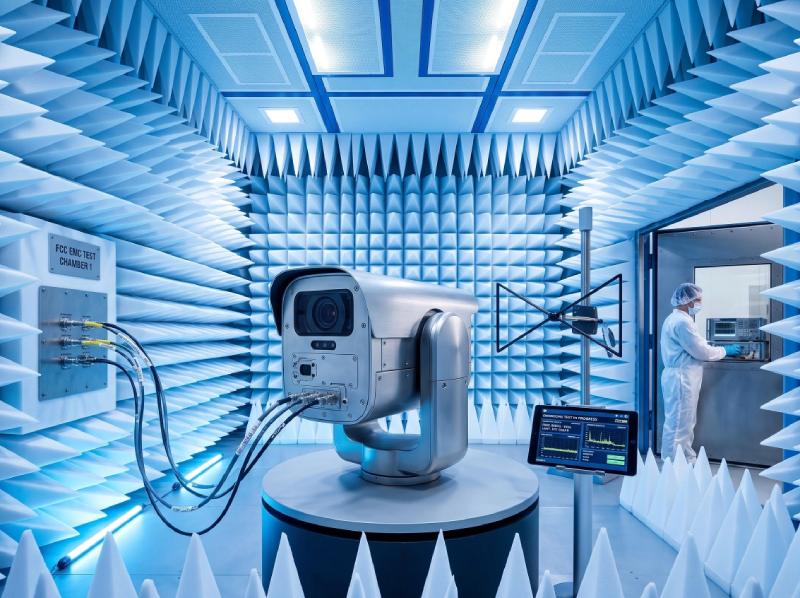
For the European market, CE marking is one of the most important compliance requirements for security camera products. The CE mark indicates that a product meets applicable EU requirements related to safety, health, and environmental protection.
For security cameras, CE compliance often involves several directives. These may include electromagnetic compatibility, electrical safety, and radio equipment compliance when wireless functions are included. In practical terms, CE is not a single test, but a framework that covers multiple technical requirements.
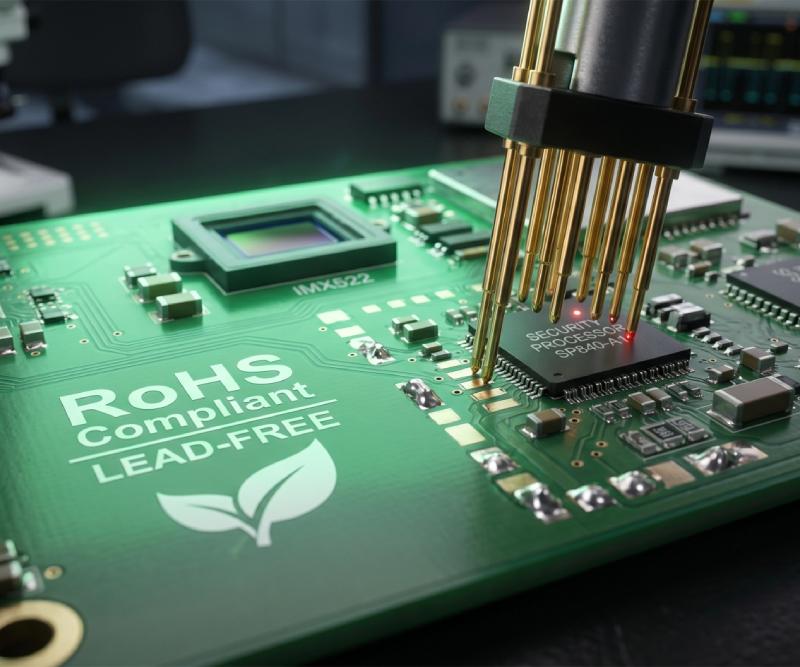
RoHS is closely related to this process. It restricts the use of hazardous substances such as lead, mercury, cadmium, and other dangerous materials in electronic products. In many cases, RoHS compliance is effectively part of the broader pathway to selling electronic products legally in Europe.
Your original article explains well that FCC, CE, and RoHS are not interchangeable. A product that complies with FCC rules for the U.S. market does not automatically qualify for Europe, because CE and RoHS involve different standards and documentation.
For B2B buyers, certifications should be considered during the sourcing stage, not after production is complete. A professional manufacturer should understand these requirements early in product design and should be able to provide reliable test reports and supporting documents.
This is especially important in OEM and ODM projects. If a supplier does not design the PCB, shielding, power structure, or wireless module correctly from the beginning, passing later compliance tests can become difficult, expensive, or even impossible. That is why buyers should not evaluate factories based on price alone. They should also assess whether the manufacturer has the engineering capability to develop compliant products consistently.
Your original article makes this point very clearly by linking certifications to engineering capability, quality control, and authentic documentation. That is exactly the message serious B2B buyers need to hear.
Compliance documents also play a major role in customs clearance and international shipping. Test reports, declarations, and certification records may be required by freight forwarders, customs brokers, or border authorities before the shipment can move smoothly through the process.
If there is a mismatch between the markings on the product, the technical file, and the shipping documents, customs delays and additional storage costs can quickly arise. This is especially important for camera products entering regulated markets where authorities pay close attention to labeling and technical conformity.
As your original article points out, certification is not only about market access. It is also closely tied to logistics efficiency and supply chain stability.
If you are looking for a reliable manufacturing partner for security cameras, WHALE VISION TECH provides professional OEM/ODM support with strong attention to product compliance, engineering quality, and international market requirements.
We understand that for global customers, certification is not just a box to check. It is part of long-term product reliability and brand protection. That is why we focus on secure product design, stable manufacturing quality, and practical support for international B2B projects.
Whether you need standard security camera models or customized OEM/ODM solutions, WHALE VISION TECH is committed to helping customers build a compliant and competitive product line for global markets.
CE, FCC, and RoHS certifications are essential for building a safe, legal, and scalable security camera business. They help ensure product quality, support customs clearance, and strengthen trust in your brand.
For importers, distributors, and project buyers, understanding these compliance requirements early can reduce sourcing risk and improve long-term business performance.
Contact WHALE VISION TECH today to learn more about our compliant OEM/ODM security camera solutions.
Yes. Security cameras with digital circuitry or wireless functionality generally need to comply with FCC requirements before they can be legally imported and sold in the U.S. Your original FAQ also treats FCC compliance as a baseline requirement for the U.S. market.
CE is a broader compliance framework covering safety, health, and technical requirements in the European market. RoHS focuses specifically on restricting hazardous substances in electronic products. This distinction appears clearly in your original FAQ and explanatory sections.
No. FCC and CE serve different regulatory systems. Products intended for the European market must meet the relevant EU requirements separately. Your original text makes this point clearly.
Ask for the full technical test reports rather than only summary certificates. It is also good practice to verify the issuing laboratory and supporting documentation. This recommendation is also included in your original FAQ.

Copyright © 2026 SHENZHEN WHALE VISION TECHNOLOGY CO., LTD. All Rights Reserved