



 2026-05-05
 111
111 Importing smart security cameras from China in 2026 is no longer only about finding competitive prices. For distributors, project buyers, and brand owners, successful sourcing now depends on compliance, cybersecurity, supplier credibility, and logistics planning.
China remains one of the world’s leading manufacturing hubs for security camera technology, offering strong capabilities in 4K imaging, solar-powered systems, AI analytics, and edge-based processing. However, importers need more than product innovation. They also need reliable manufacturers that can meet international compliance standards, protect end-user data, and support long-term business growth.
Before placing any order, importers should first understand the compliance requirements of their target market. In 2026, regulations related to sourcing smart security cameras have become more complex, especially for government, commercial, and high-security projects.
For the U.S. and other regulated markets, NDAA-related requirements remain an important consideration. Buyers should verify product origin, key chipsets, and supply chain background before committing to large-volume procurement. At the same time, market-entry certifications such as FCC, CE-RED, and UKCA should be treated as essential checkpoints rather than optional labels. Your original article makes this compliance-first approach the foundation of the sourcing process, and that is exactly the right direction for a website article aimed at importers.
Smart security cameras are no longer just hardware products. In 2026, software security, data privacy, and firmware reliability are equally important when evaluating a supplier.
Importers should prioritize camera solutions that support encrypted transmission, secure local or cloud storage, firmware update mechanisms, and strong account protection features. Functions such as privacy zones, role-based permissions, and multi-factor authentication can add real value for customers in both residential and commercial projects.
As highlighted in your original draft, privacy-by-design features and data protection standards have become key selling points in the global smart camera market. Buyers should look for products that help meet GDPR or similar privacy requirements where applicable.
The safety of your import process also depends on the stability and professionalism of the manufacturer. In today’s market, there is a clear difference between factories with strong R&D and quality systems and low-end workshops that compete only on price.
A reliable smart camera manufacturer should be able to provide:
Consistent quality management procedures
Transparent component sourcing
Environmental and durability testing
Waterproof verification for outdoor models
Technical support before and after shipment
OEM and ODM development capability
Your original article rightly emphasizes the value of ISO-based quality systems, factory audits, QC verification, and direct communication with engineering teams. These are exactly the factors serious importers should evaluate before choosing a supply partner.
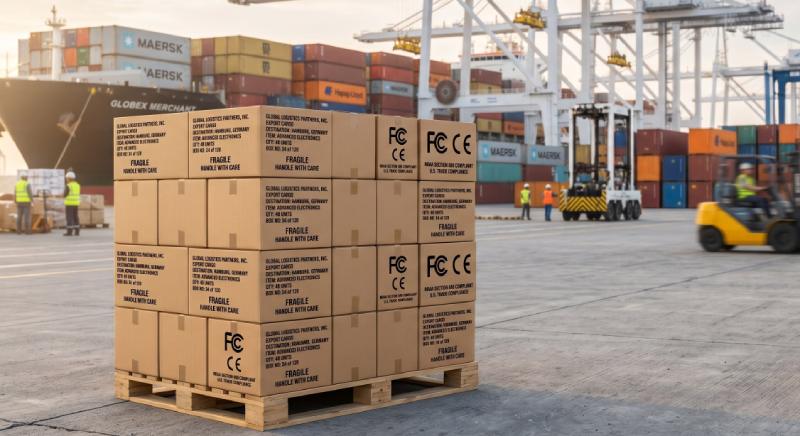
A compliant product can still become a problem if the shipping documents are incomplete or the customs requirements are misunderstood. Logistics planning is especially important for smart security cameras because some models may include wireless modules, solar components, or lithium batteries.
Importers should confirm the correct HS code, shipping terms, and required documentation before shipment. If the products include batteries, supporting documents such as UN38.3 and relevant safety paperwork should be prepared in advance. Commercial invoices, packing lists, certificates of origin, and compliance documents should all be reviewed carefully before cargo departure.
Your original article places strong emphasis on customs classification, Incoterms, lithium battery requirements, and documentation readiness, and those points are worth keeping because they are highly practical for buyers.
Many importers still make the mistake of choosing a supplier based only on quotation. In reality, the lowest price often comes with greater risk, including unstable quality, limited firmware support, poor warranty response, or incomplete compliance documents.
A better sourcing strategy is to work with a manufacturer that can offer:
Stable production capacity
Clear compliance support
Secure and reliable smart camera solutions
Responsive technical communication
OEM/ODM customization
Consistent after-sales service
This kind of partnership is especially valuable for businesses that want to build a long-term brand rather than just complete a single low-cost transaction.
If you are looking for a trusted partner to simplify smart camera sourcing, WHALE VISION TECH provides professional support for global customers seeking secure, reliable, and customized smart security camera solutions.
We focus on product quality, compliance awareness, and long-term customer cooperation. From customized OEM/ODM development to secure camera solutions for modern applications, WHALE VISION TECH is committed to helping customers improve supply chain reliability and strengthen market competitiveness.
Whether you are sourcing solar security cameras, AI-enabled surveillance products, or custom smart camera solutions, our team is ready to support your next project with practical expertise and reliable manufacturing capability.
Importing smart security cameras from China in 2026 requires more than cost comparison. Buyers need to balance regulatory compliance, cybersecurity, manufacturer verification, and logistics planning in order to build a stable and profitable sourcing strategy.
By choosing the right manufacturing partner, importers can reduce compliance risk, improve product reliability, and create stronger long-term value in the market.
Contact WHALE VISION TECH today to explore smart security camera solutions tailored to your business needs.
No. Restrictions usually apply to specific companies, technologies, or procurement scenarios. Many Chinese manufacturers can still provide compliant and export-ready smart security camera products for international markets. Your original FAQ also makes this distinction clearly.
That depends on the destination market, but common requirements include FCC, CE-RED, and UKCA. Cybersecurity-related compliance has also become increasingly important in 2026.

Copyright © 2026 SHENZHEN WHALE VISION TECHNOLOGY CO., LTD. All Rights Reserved